Healthcare
Design Futures
Innovation
Home care
Wearable
Context
Personal Project Paticipation at Sanofi 2025 Device Innovation Challange
Time
2025 – 3 weeks
Team
Philipp Roser
My Contribution
Research, Concept, Prototyping, Physical Product Design
Summary
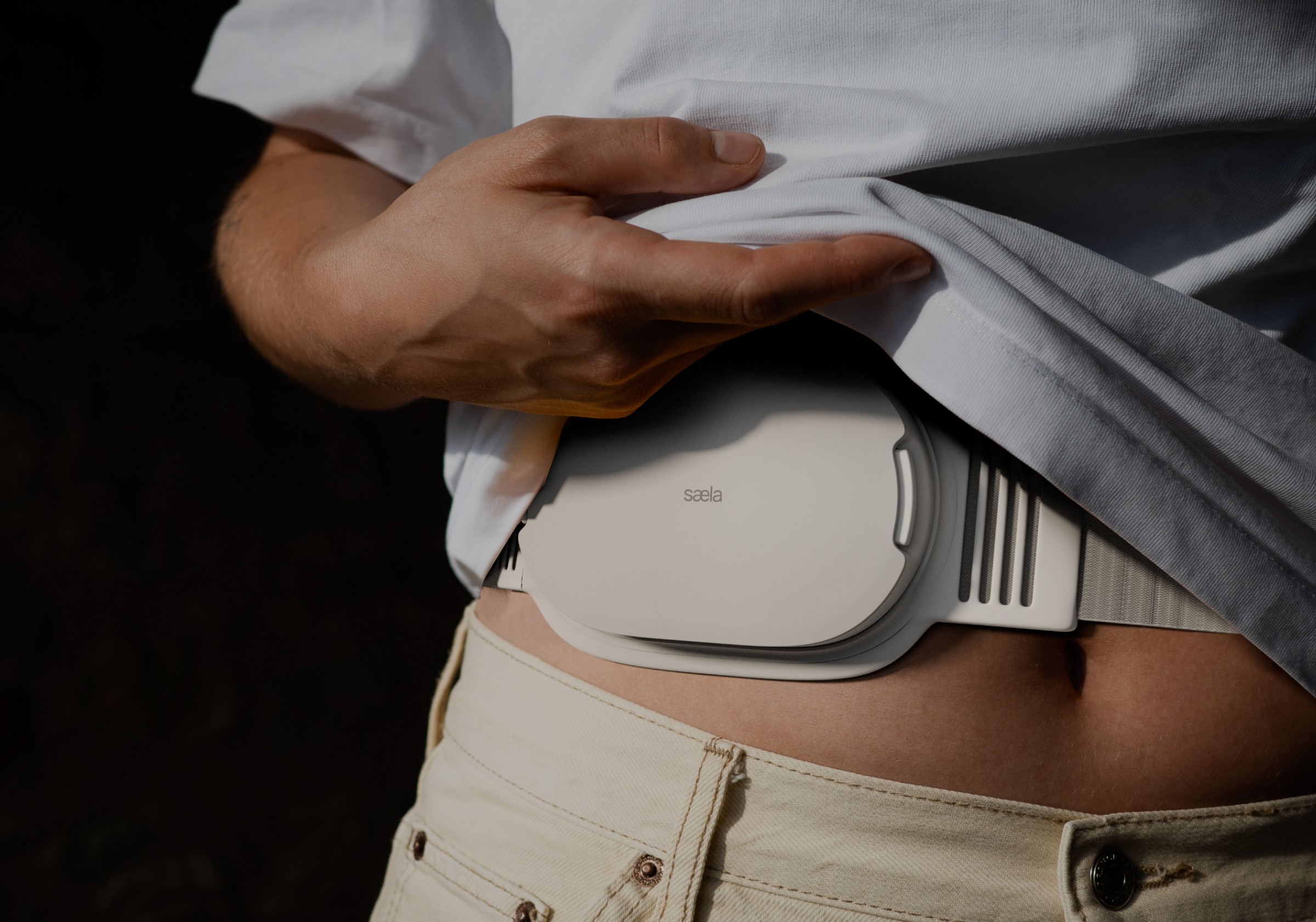
Developed as part of the Sanofi Design Innovation Challenge, Sæla explores new possibilities for large-volume on-body drug delivery systems. Current solutions often focus on technical drug administration, leaving questions of usability, comfort, and patient experience secondary. Our goal was to rethink OBDS from a design-driven perspective that considers the entire treatment journey. The resulting concept combines a wearable device in a circular sytem to support patients in managing treatment safely and confidently at home.
Inital Questions
How the home kit arrives
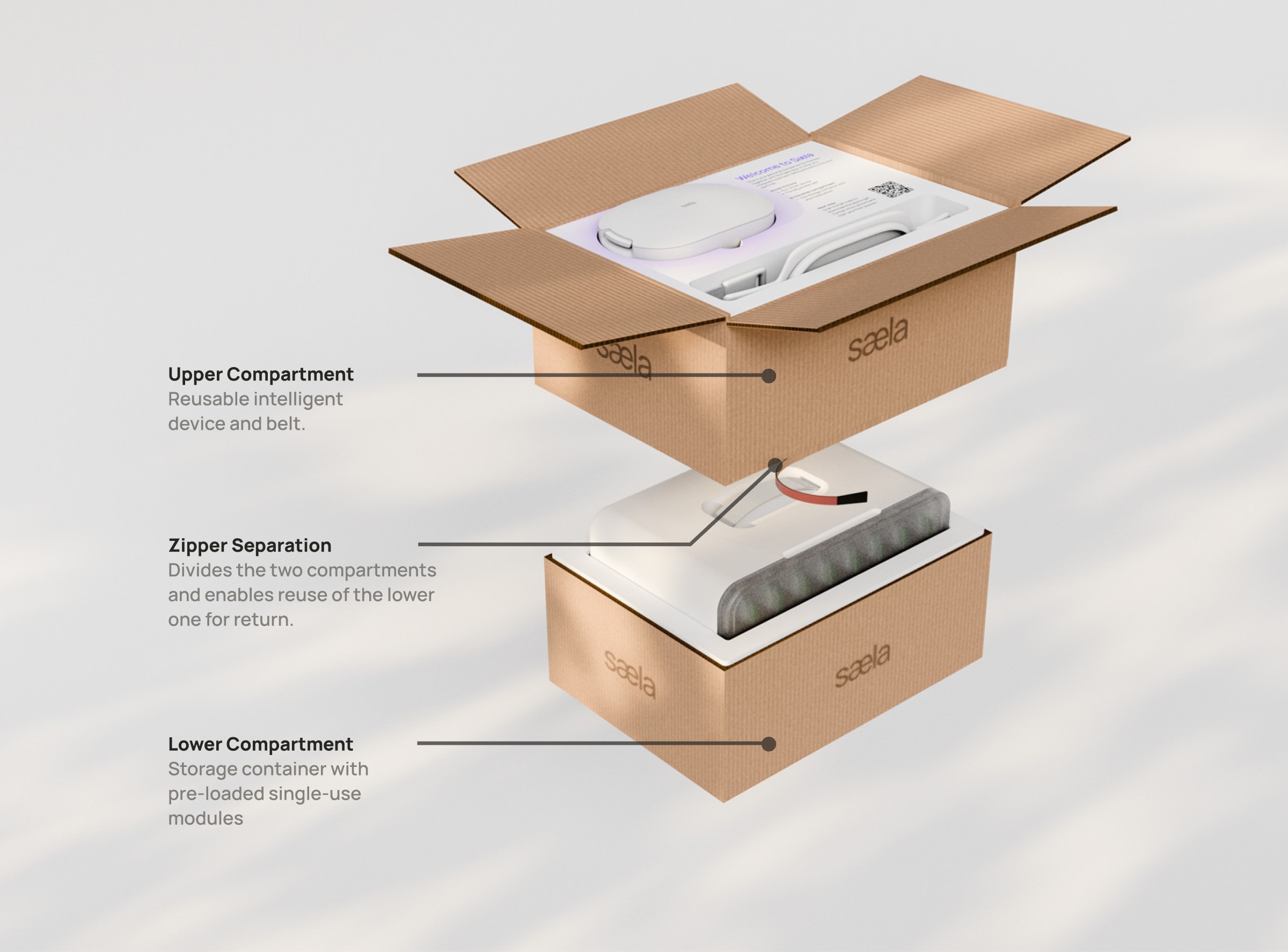
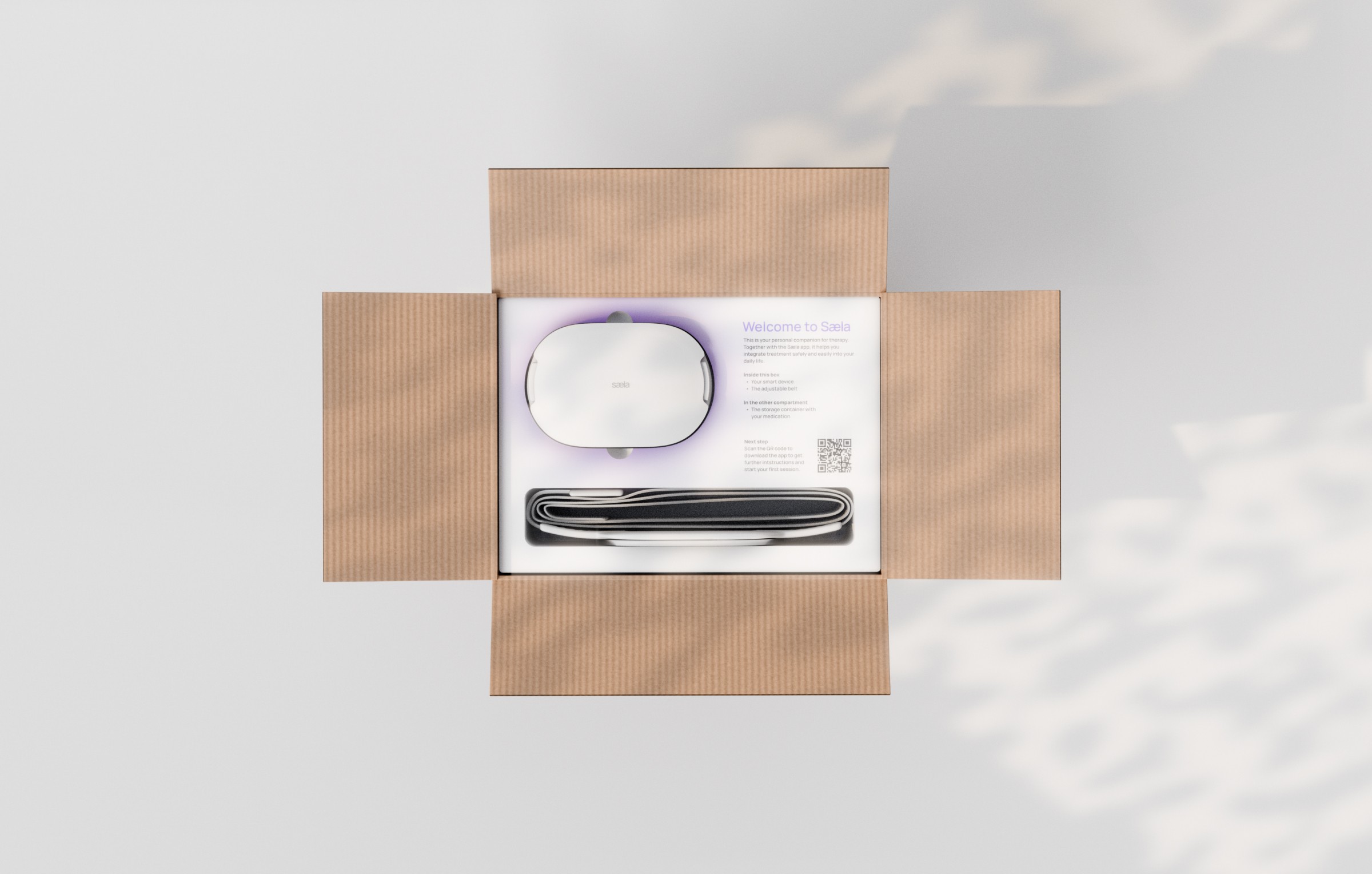
The kit arrives by post and contains two compartments: a reusable sensing device on top and an insulated storage box below that keeps drug doses cooled during transport and at home. After use, the storage box is returned in the same package, allowing single-use parts to be recycled and the system to operate in a closed loop.
Safe storage & guidance
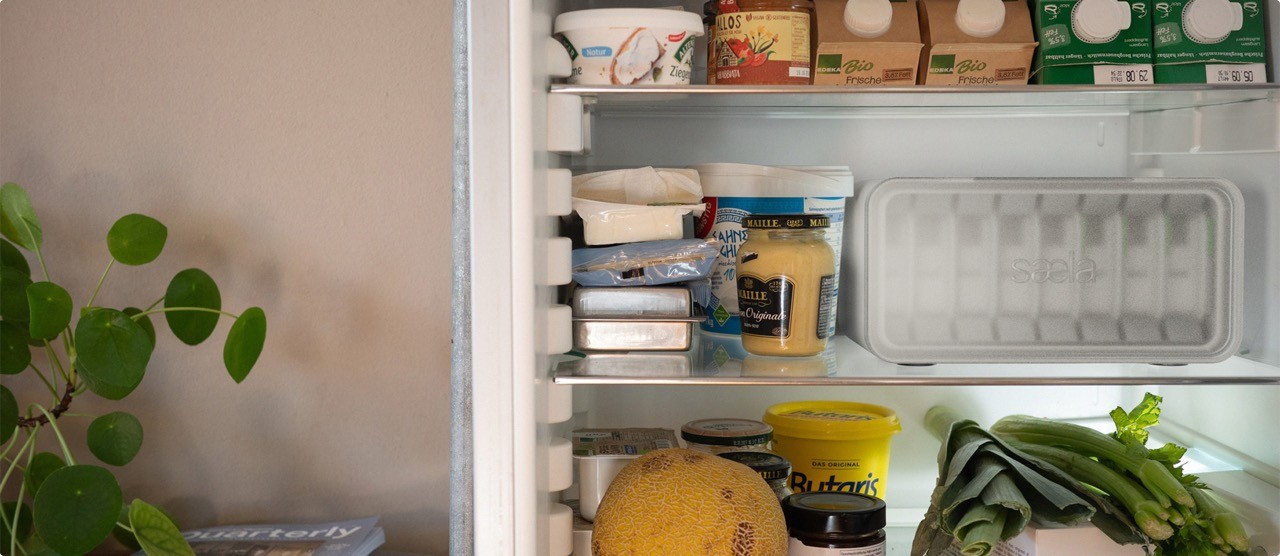
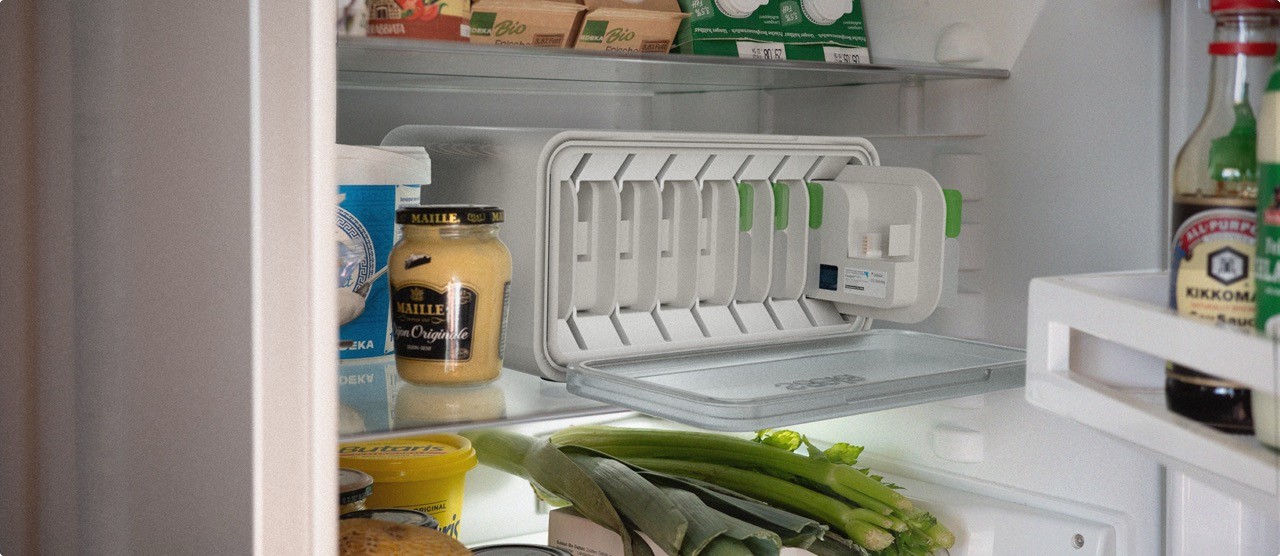
The refrigerated storage box keeps drug doses safe and clearly indicates whether they have been used.
The insulated box buffers temperature fluctuations and protects the medication in the fridge. Each module has a sealed adhesive patch with a small green indicator showing that the dose is unused. Once the foil is removed, the mark disappears and the module can later be returned in the box for recycling and refilling.
Easy return of used material
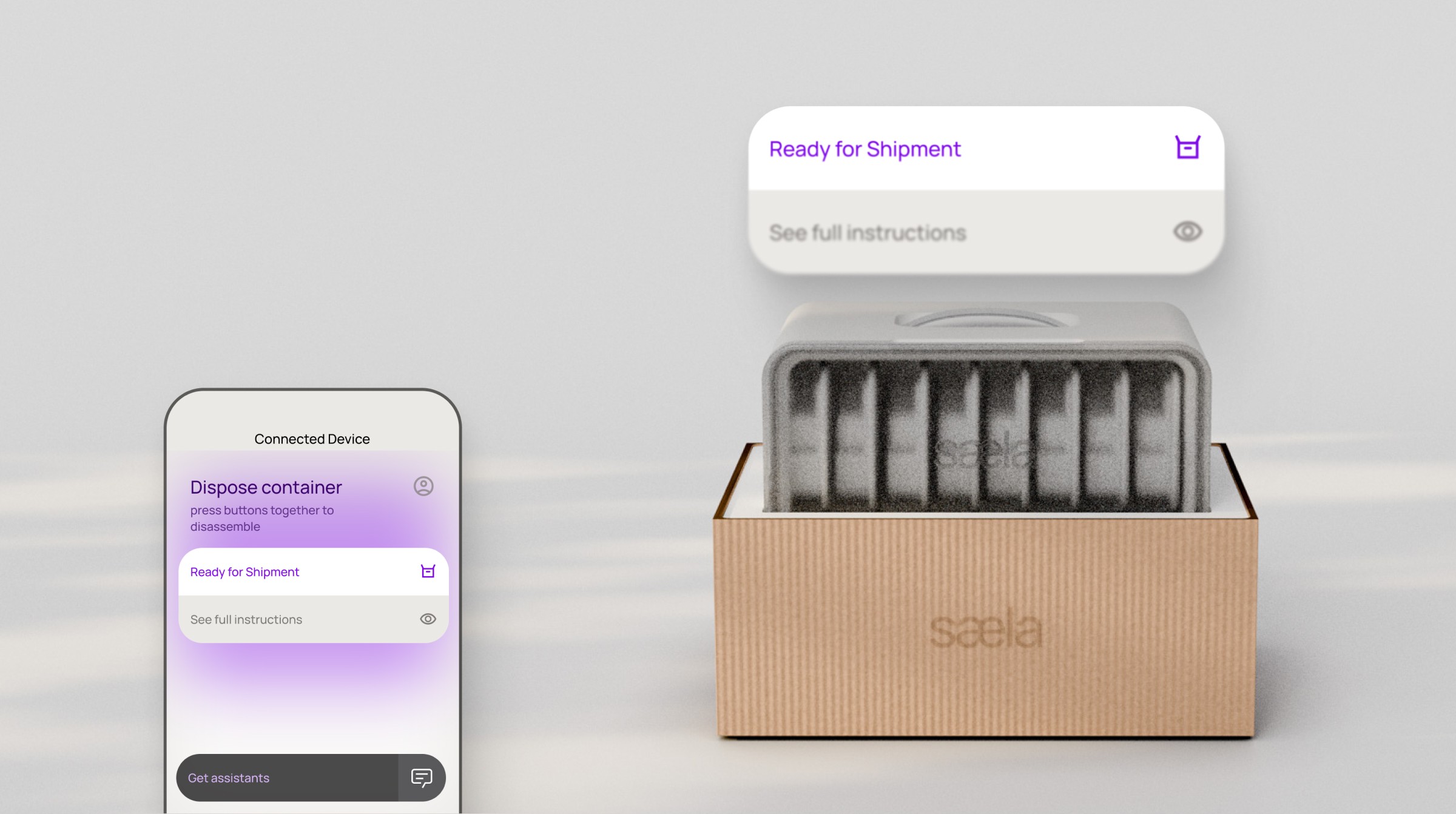
When all doses are used, the storage box is placed back into the outer packaging and sent back in the same parcel. The app automatically generates a shipping label, making the process convenient and seamless. This system supports circularity by enabling recycling of single-use parts and refilling of the storage container.
The Setup
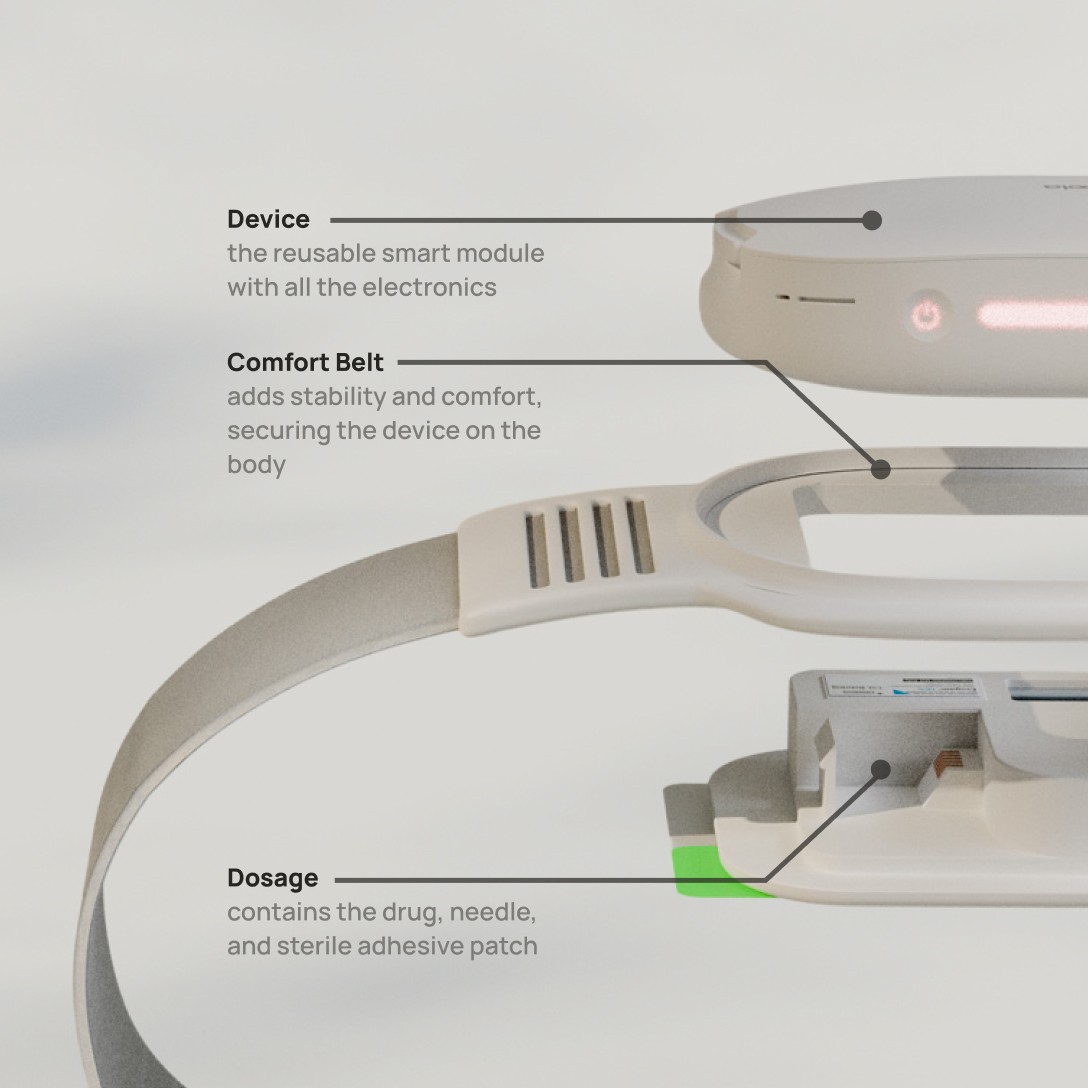
Why a belt?
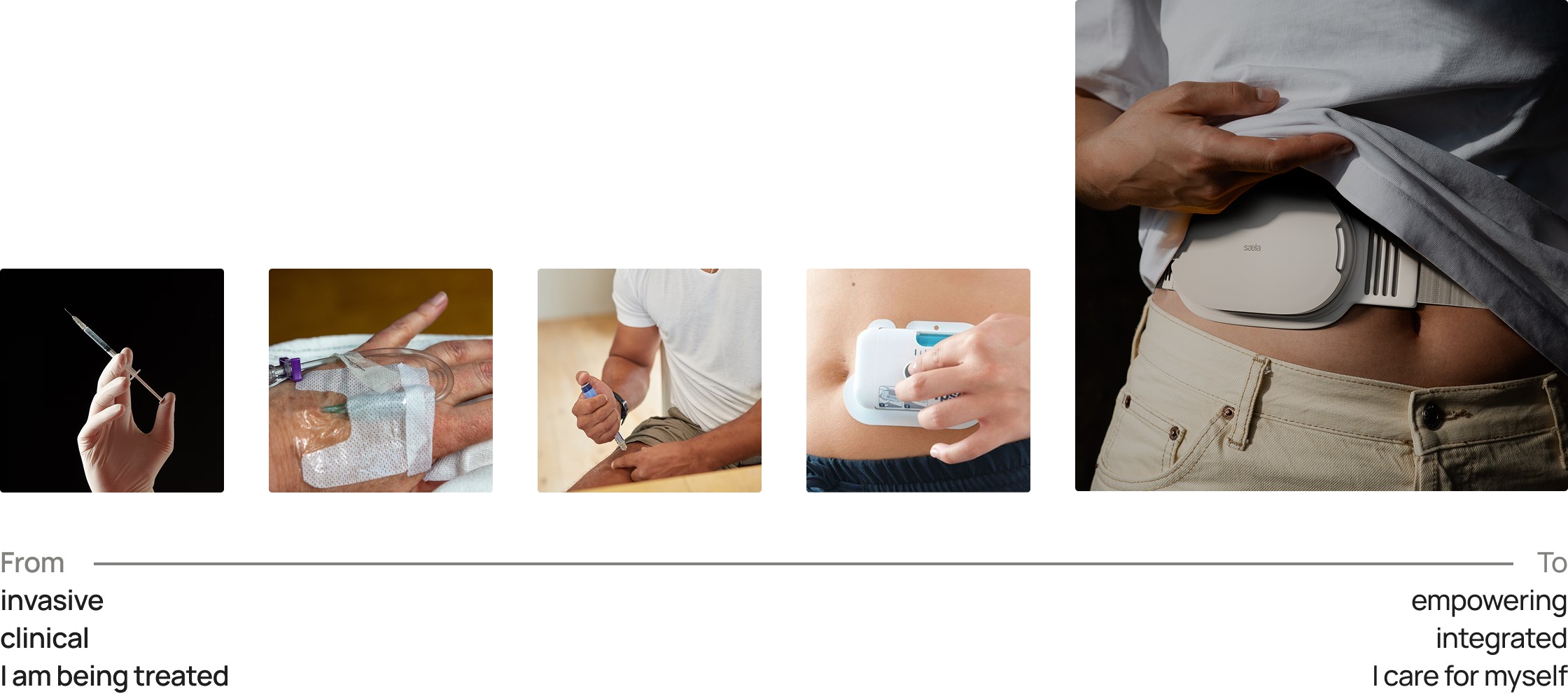
First Touchpoints
Digital Guidance
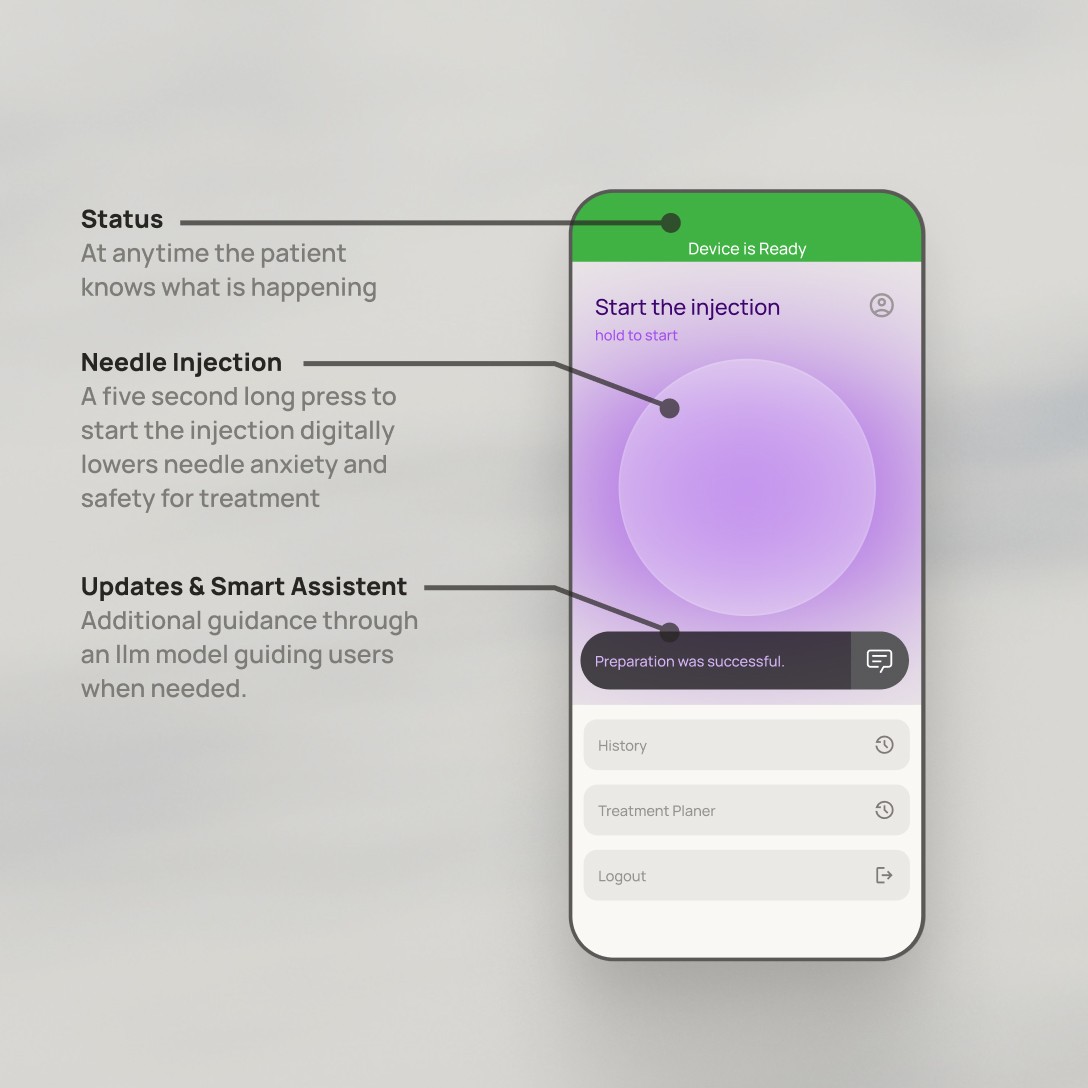
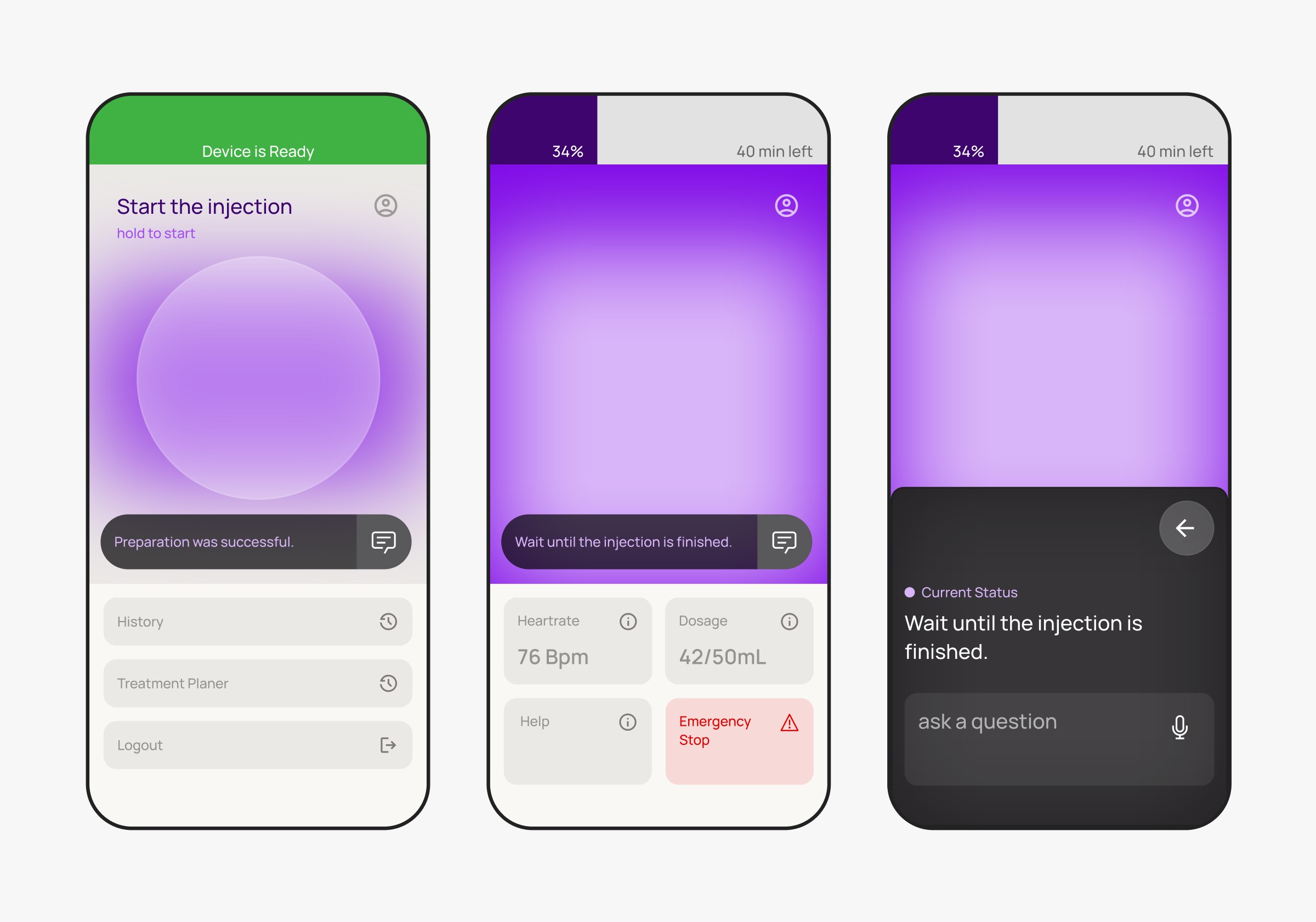
The app supports patients through the whole treatment designed to make it feel safer and more approachable.
Actions such as the needle injection are translated into digital gestures like a long press to reduce fear around handling injections. The visual language uses blurred fluid shapes to reference medication and functional colors to indicate different states, such as green for a completed treatment.
The Needle injection moment
Redesigning the injection moment through experience prototyping.
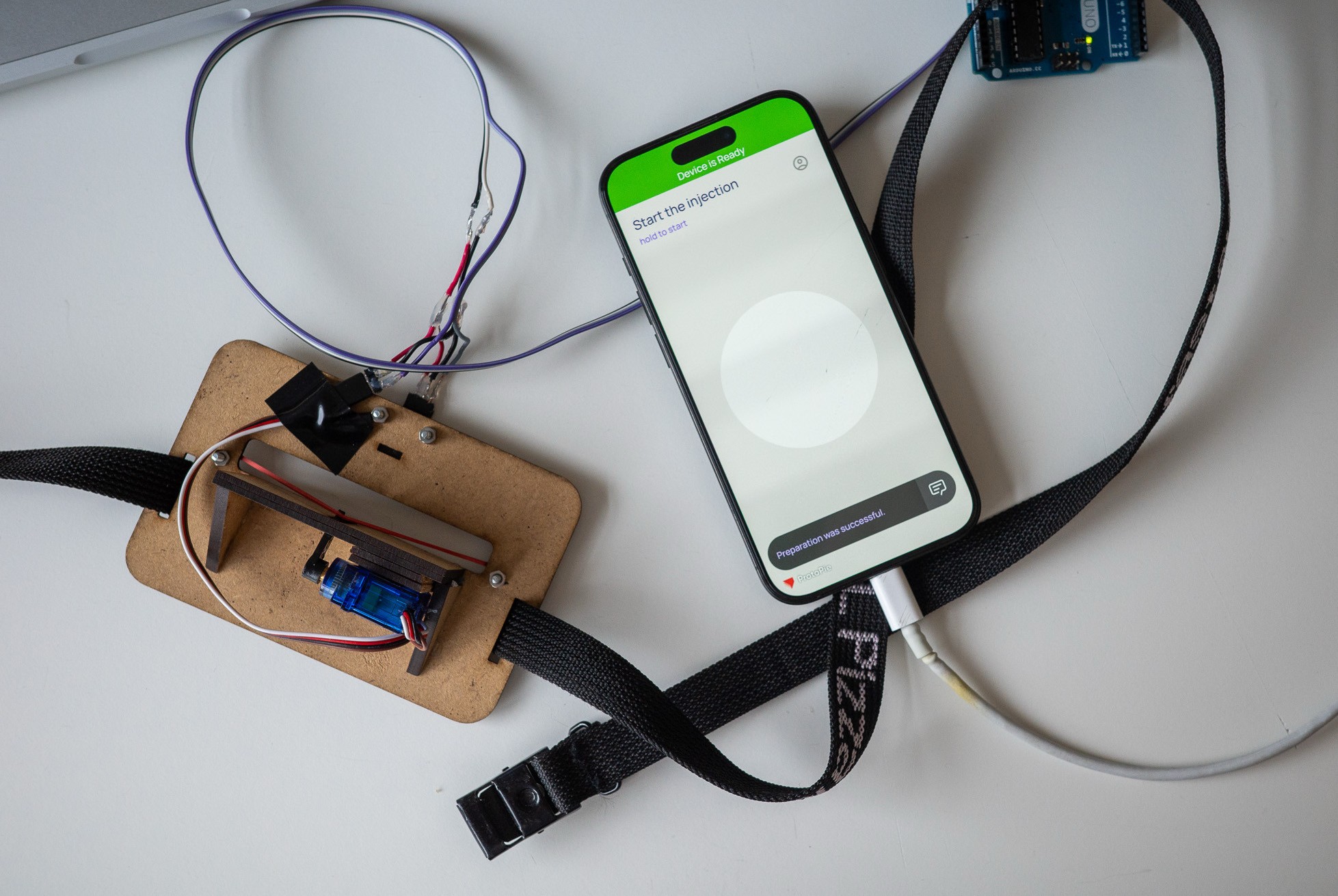
Using prototyping, I explored how physical and digital feedback could shape the emotional perception of self-injection.
Through synchronized haptics, animation and distraction-based interactions, we investigated how anticipation, bodily attention and perceived control might influence the treatment experience beyond pure functionality.
Reflection
Unlike many university projects, this design challenge came with a very defined brief, which created a focused problem space. It was also my first encounter with the medtech sector, a field I found both challenging and interesting. We approached the project from a system perspective, looking beyond the device itself to the surrounding service and logistics. Even though i generally liked this approach, looking back it feels like it would have helped us to focus further on specific aspects. I also think deeper user research would have strengthened the concept, due to the timeframe and us working remote we were not able to directly speaking to patients and had to rely on desk research and a lot of assumptions instead.
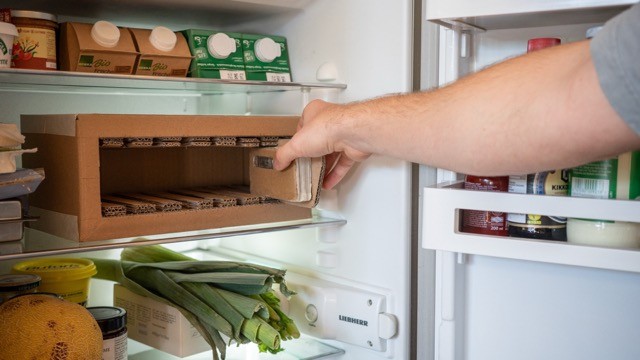
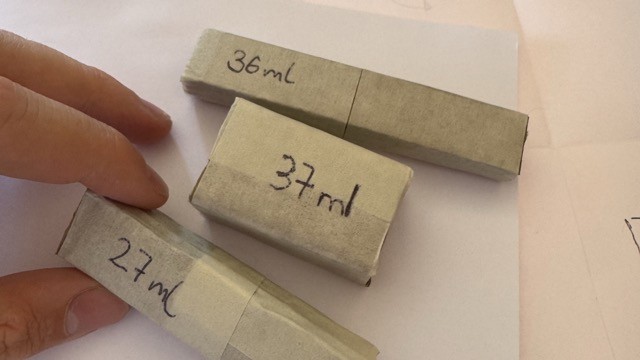
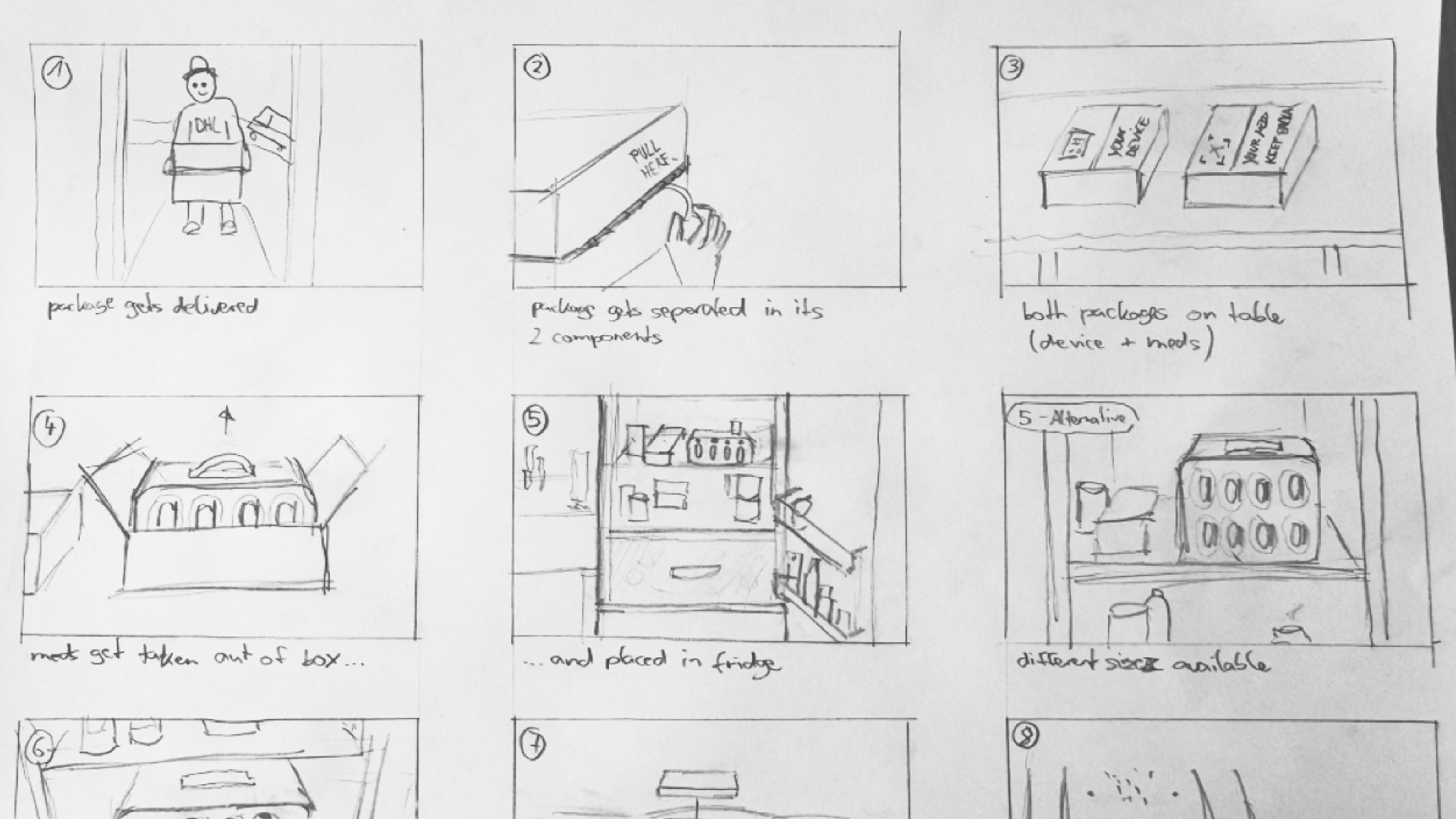
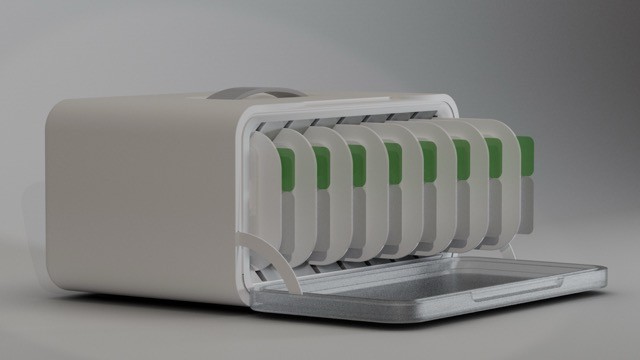
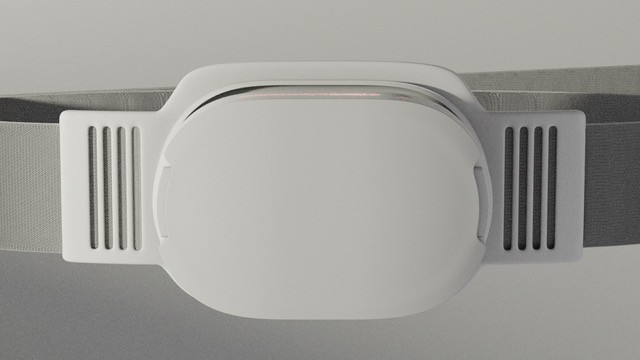
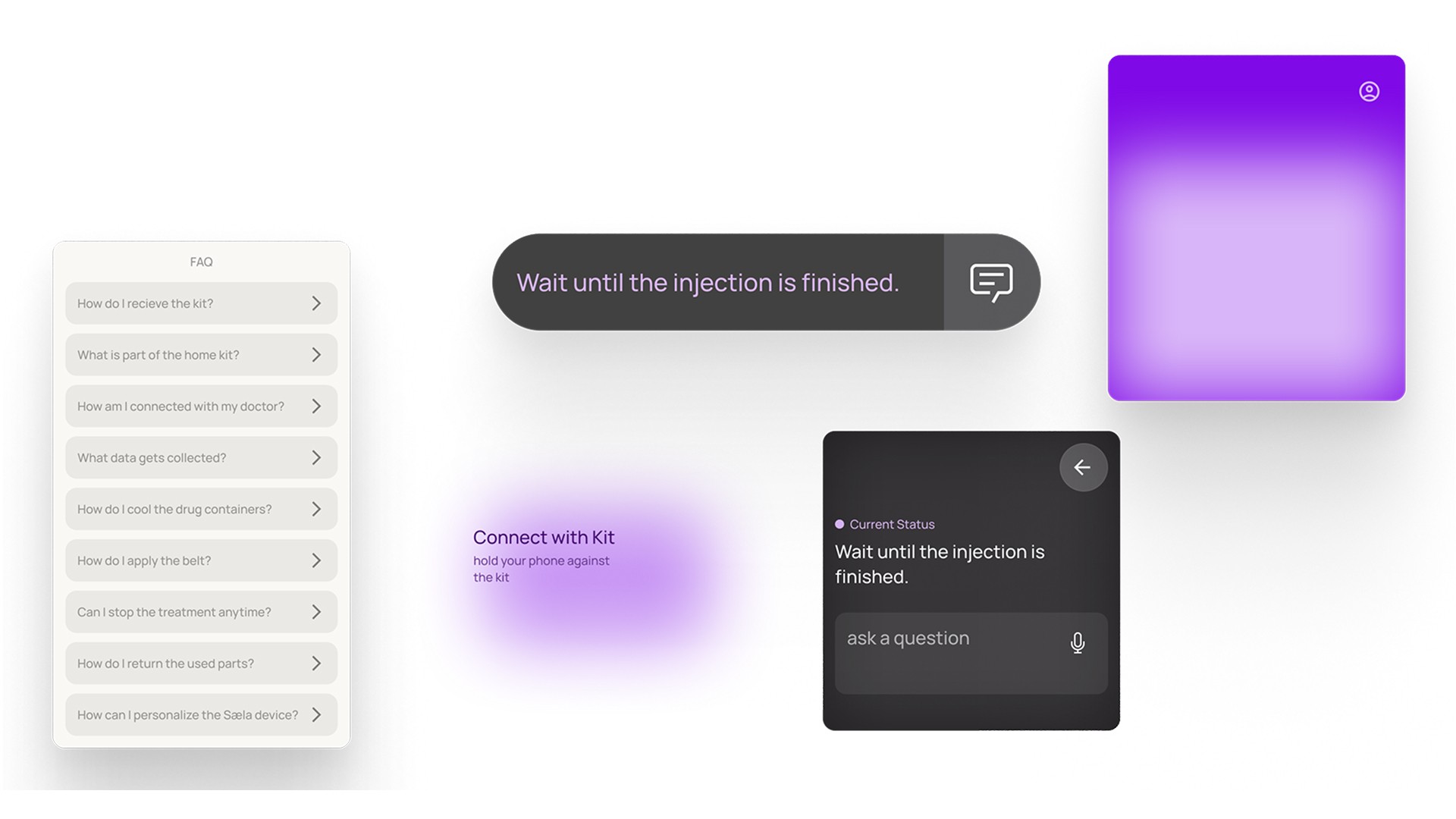
The development process included physical prototypes, storyboards, 3D explorations, and UI elements to test different aspects of the system and gradually shape the final concept.
©2026 Pius Burkhart